

PCR gets requested more often than it gets understood. Before specifying recycled content on a packaging program, it is worth knowing exactly what the resin is, what it costs, where it performs differently from virgin material, and what percentage the formula and the category can actually absorb.
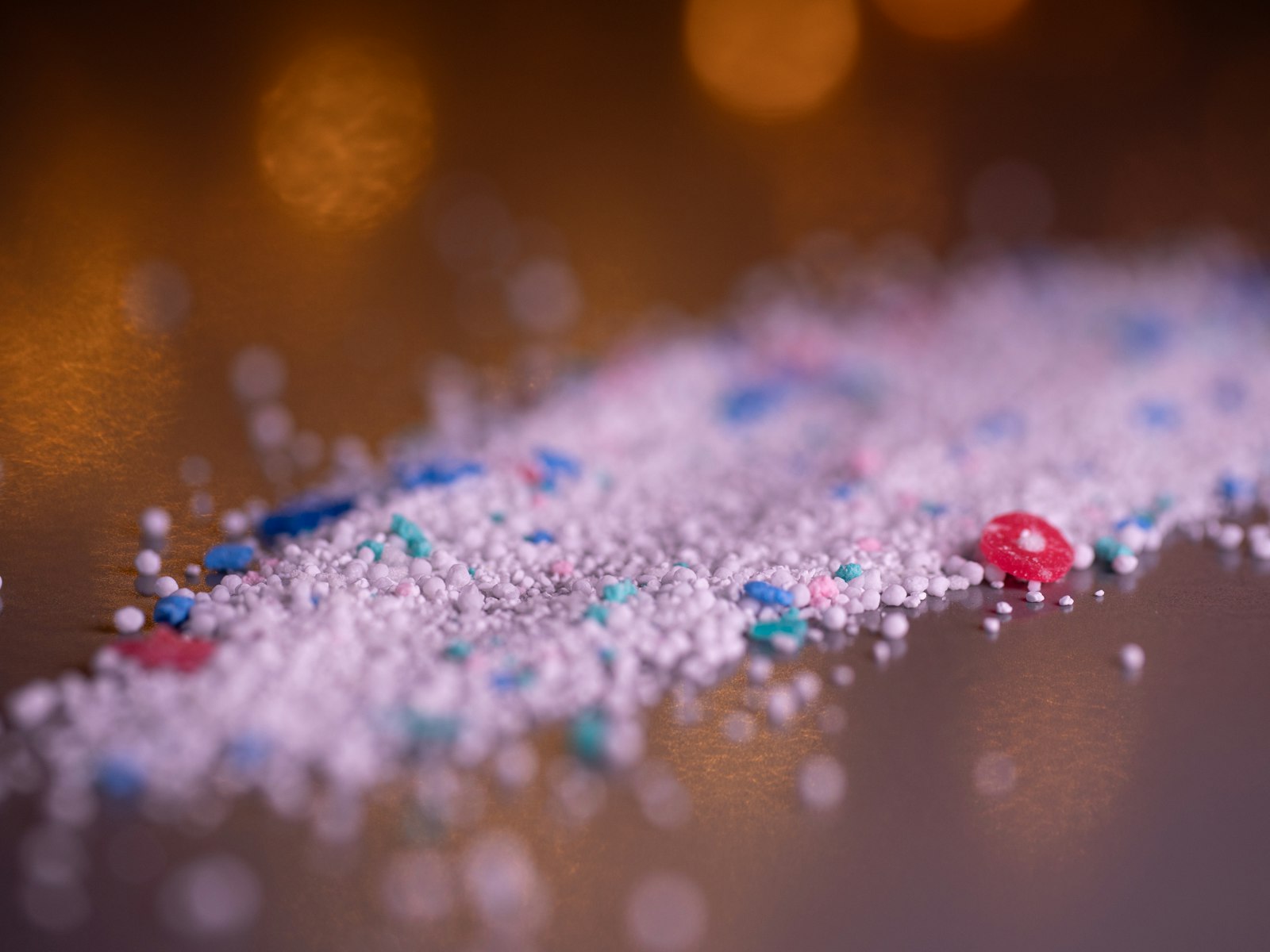
Post-consumer recycled resin is plastic that has already completed a full life cycle as a consumer product: collected, sorted, cleaned, and reprocessed back into usable pellets.
Three terms get used interchangeably and should not be. Post-consumer recycled (PCR) material reached a consumer and came back. Post-industrial recycled material is manufacturing scrap that never left the supply chain; it is cleaner and more consistent, but it supports a weaker sustainability claim. Regrind is in-house scrap from the molder's own production run and supports no recycled-content claim at all.
When a specification calls for 30 percent PCR, it means 30 percent by weight of the resin feeding the mold is reprocessed material blended with virgin resin. It does not mean 30 percent of the finished part is somehow separately recycled. Confirm that the resin supplier is quoting by weight, which is the industry standard, and that the stated percentage holds across full production lots.
Reprocessed resin is rarely as visually clean as virgin material. PCR HDPE and PCR PET commonly carry a slight gray or amber tint depending on the source stream.
Clarity depends heavily on that stream. PCR from mixed-color bottle collection typically comes out gray or hazy, because optical sorting cannot perfectly separate every colored bottle from a clear one before reprocessing. Food-grade, bottle-to-bottle PCR PET from tightly sorted streams gets closer to virgin clarity but usually still carries a faint tint.
This matters enormously for a clear cosmetic jar and barely at all for an opaque tube or a colored bottle where the PCR content is invisible. High-PCR packaging often leans deliberately into a natural or frosted aesthetic. It also widens the tolerance band that has to be held on color matching.
This is the trade-off brands underestimate most consistently. Recycled resin, particularly HDPE and PP from consumer packaging streams, can carry residual odor from prior contents or from reprocessing itself, even after washing and decontamination.
For fragrance-sensitive products, unscented lotions and minimalist skincare lines marketed on ingredient purity, this is a real formulation risk. Request an odor-tested resin lot before committing PCR content to a fragrance-free line.
Odor is lower-stakes in supplements, where consumers rarely evaluate a bottle by scent, though it still warrants lot testing for flavored or aromatic formats.
PCR resin has typically been through at least one heat cycle already, which can reduce impact strength and melt consistency relative to virgin material. Most cosmetic and commodity packaging holds up fine at 25 to 50 percent PCR. Above that range, wall thickness and gate design sometimes need small adjustments to compensate for altered flow characteristics.
PCR streams vary more batch to batch than virgin resin does. Where a program already manages color-match variance or a tight cosmetic-grade versus industrial-grade specification, adding PCR widens the band further. Color consistency across lots is the single most common complaint on PCR programs that were not scoped carefully at the outset.
PCR PET is the most mature and consistent post-consumer stream, largely because bottle-to-bottle PET recycling infrastructure is well established in North America and Europe.
PCR HDPE supply is less consistent and more regionally dependent, which is part of why HDPE PCR pricing moves around more than PET PCR pricing does. Where PCR content is a hard requirement, PET is generally the easier resin to source it in reliably.
PCR is not automatically cheaper than virgin resin, and buyers are frequently surprised by this.
Collection, sorting, washing, and reprocessing all add cost, and PCR pricing tracks its own supply-demand cycle independent of virgin resin pricing. Depending on market conditions, PCR can run at a premium to virgin material, particularly food-grade or cosmetic-grade PCR that has passed additional decontamination processing.
Budget PCR as a brand and compliance decision.
Virgin resin carries food-contact status by default in most grades, while PCR does not.
In the United States, FDA guidance on recycled plastics in food-contact applications is the practical benchmark, and cosmetics packaging generally follows it even though cosmetics are not regulated as food. The guidance expects the reprocessing method to demonstrate adequate contamination removal, commonly through a super-clean or equivalent decontamination process with documented validation.
Ask the resin supplier for that documentation before specifying PCR on anything that touches the formula directly. An outer layer with no product contact is a different and much easier question.
Clarity and odor are the binding constraints. A 30 percent PCR blend in an opaque HDPE bottle is usually a low-risk, high-payoff sustainability claim. A 100 percent PCR clear PET jar for a premium skincare line is a materially harder engineering and sourcing problem. Claiming it without having tested clarity and odor against the actual formula is a reliable way to end up reformulating packaging after launch. See Jadewell's cosmetics packaging capabilities.
Supplement bottles are ingestible-adjacent packaging, sitting in direct contact with capsules, tablets, and powders a consumer will swallow. Contamination control in the sourcing chain matters more here than in any non-ingestible application.
On barrier performance, the honest answer is reassuring: for HDPE and PP, PCR barrier properties sit close to virgin resin of the same polymer. Moisture and oxygen transmission are functions of the base polymer's molecular structure and are unaffected by whether that batch of pellets has been through a prior use cycle. Contamination control is the governing variable.
A 25 to 30 percent PCR HDPE bottle with documented food-contact-equivalent decontamination is a well-supported, low-risk claim for most supplement programs. Validate higher percentages against the specific formula and shelf-life requirement before committing at scale.
In jurisdictions where CR mechanisms carry specific material and testing requirements, PCR fits less comfortably, because lot variability can complicate certification. Critically, a resin change is itself a CR retest trigger — switching to a PCR blend on a certified closure invalidates the existing certification and requires retesting the exact configuration. Budget for that before specifying PCR on a CR program.
Few packaging runs use 100 percent PCR. Common blends run 25, 30, or 50 percent PCR mixed with virgin resin, balancing sustainability claims against color consistency and mechanical performance. Higher percentages are achievable but usually require loosening color and clarity specifications to accommodate the variation.
Any recycled-content claim needs to be substantiated with a verified PCR percentage. The FTC's Green Guides govern environmental marketing claims in the United States, and overstating recycled content carries real compliance exposure.
Recyclable, compostable, and PCR describe three different things, and only one of them is a verifiable property of the package in a buyer's hand. A breakdown of what these claims actually mean covers which survive scrutiny under state truth-in-labeling law.
Jadewell runs PCR HDPE and PCR PET across both facilities. Recycled-content percentage and the supporting documentation available for a given program are confirmed at quotation.
A PCR target affects tooling trials as well as the production run, so it belongs in the specification from the start. For the broader resin selection conversation, see PP vs. HDPE vs. PET.
Explore the sustainability and PCR program, or request a quote with the target PCR percentage, resin, color reference, and clarity requirement.