

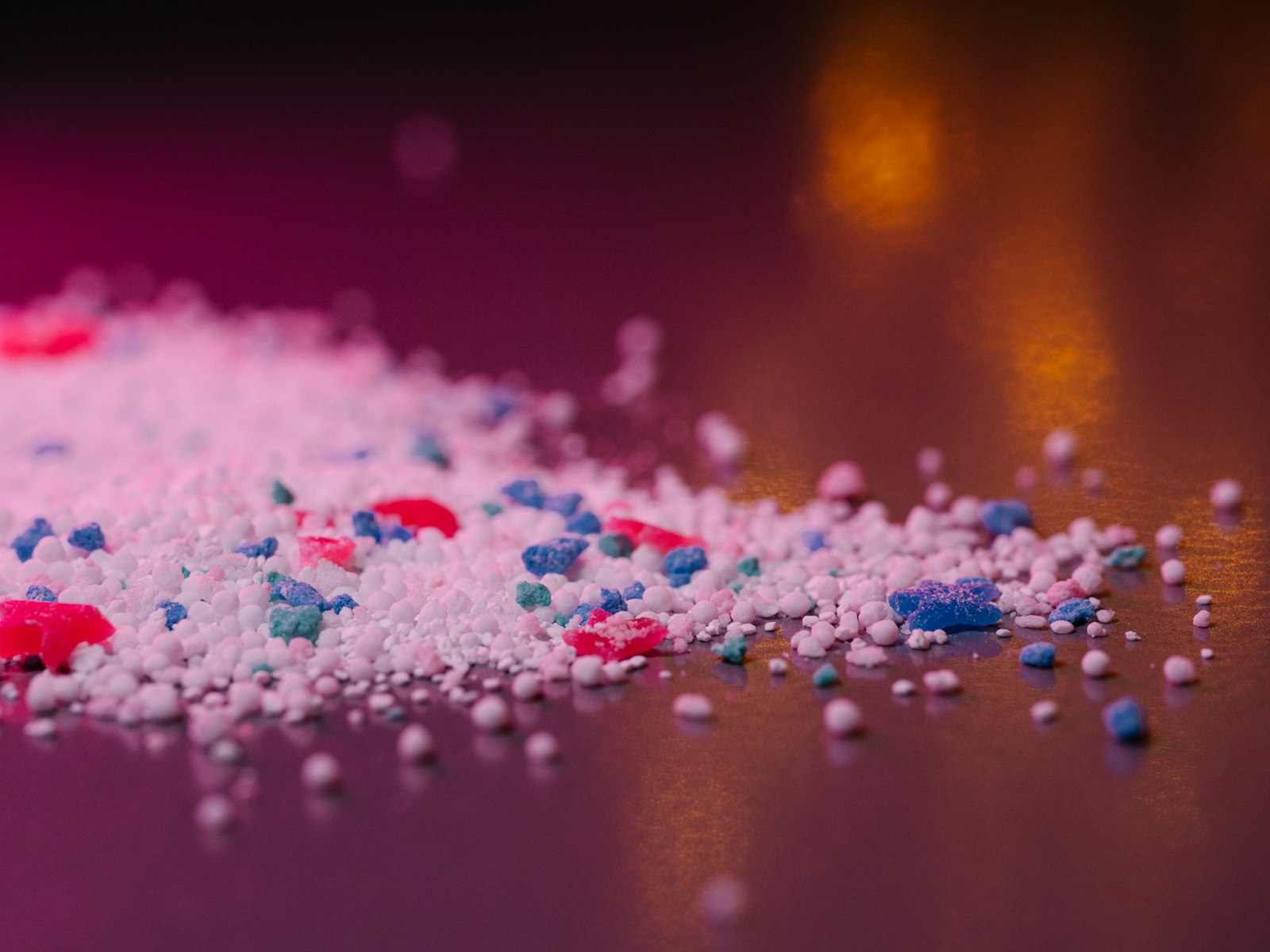
Regrind is granulated sprues, runners, and rejected parts fed back into the process, and it is standard practice in injection molding.
Virgin resin producers themselves expect a portion of scrap to be reprocessed, and it is built into how the material is priced and specified. The practical question is how much a given part can tolerate before its physical properties start to slip.
Every heat cycle through a barrel degrades polymer chain length slightly. Thermal and mechanical stress during melting and injection cause chain scission, which shows up as reduced impact strength, increased brittleness, and inconsistent melt flow.
For commodity resins like HDPE and PP, 20 to 25 percent regrind blended with virgin material is a common, safe ceiling for most non-structural packaging parts.
Push past 30 to 40 percent, especially with resin already reground once, and mechanical properties degrade in ways that show up as field failures.
Cosmetic closures and thin-wall parts under continuous flex stress are the least tolerant of high regrind content, because they depend on consistent elongation and impact resistance. Snap-fit hinges and trigger sprayer components sit squarely in that category.
Thicker structural parts like bottle bases and jar walls tolerate higher ratios, because more material cross-section absorbs the property variation.
Color-critical parts are a separate problem. Regrind carries pigment history from whatever it was molded from before, which is why color-matched programs cap regrind lower or require dedicated single-color regrind streams.
These get conflated in sustainability conversations and they are not the same thing. Regrind is in-house scrap from the molder's own production. PCR is post-consumer material that has been through a use cycle and a recovery stream. Regrind supports no recycled-content claim, because the material never left the factory.
Ask what percentage a quote assumes, whether it is virgin-plus-regrind blended in-house or a purchased stream from an unknown source, and whether the ratio is documented per job or eyeballed on the floor.
A supplier who cannot answer specifically is not controlling for it, which means the part's mechanical properties drift between production runs even when nothing else about the process changed. In-line inspection catches the cosmetic symptoms but not the mechanical ones.
Regrind ratios are set per part, per resin, and documented in the process sheet. Structural parts run higher ratios where mechanical margin supports it. Closures, hinges, and color-critical cosmetic parts run tighter limits or virgin-only.
For how resin selection affects part performance more broadly, see PP vs. HDPE vs. PET.
Regrind percentage is stated on the process sheet for every part Jadewell molds. Request a quote with the part, resin, and any regrind or PCR content requirement.