

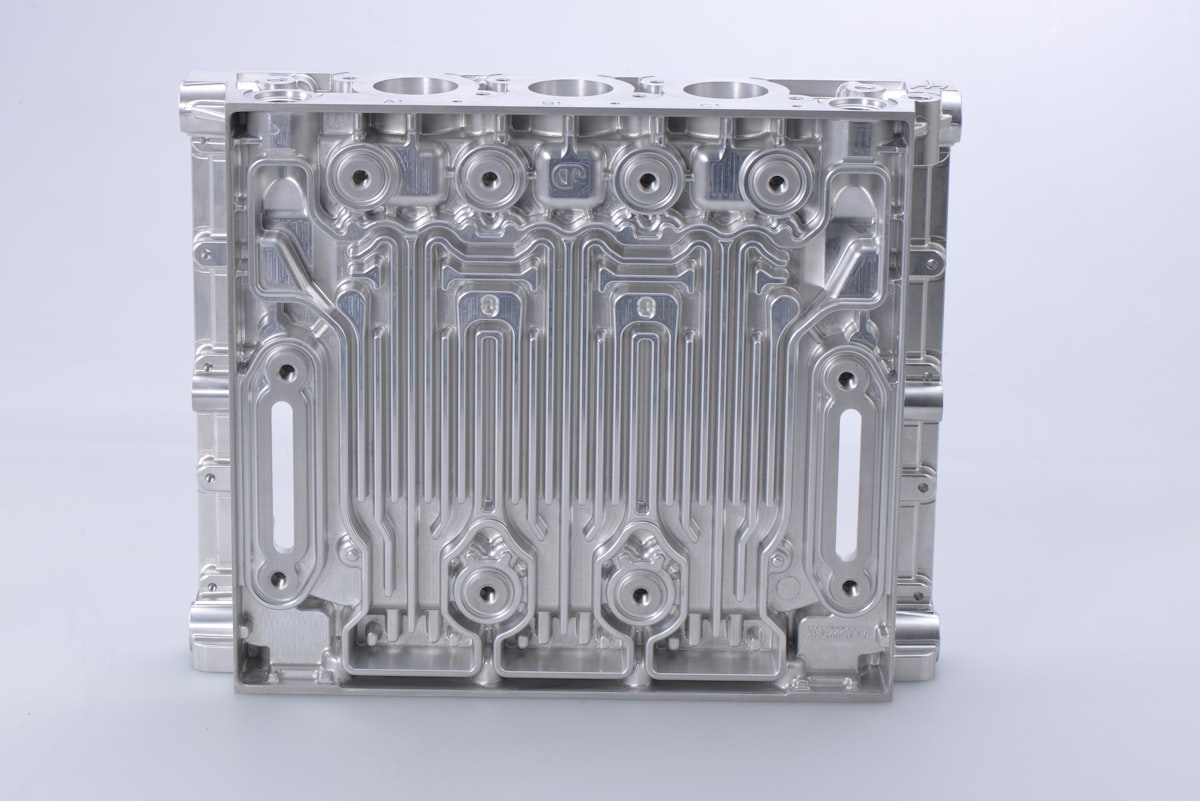
Every custom bottle or closure starts with a mold, and that mold is a fixed cost that has to get recovered somehow. How a supplier chooses to recover it changes what the quote looks like, and it is one of the easiest places to misread a number.
Tooling shows up on a quote one of two ways. Either it is billed as a separate one-time line item, or it is amortized: folded into a higher per-unit price spread across an agreed order volume.
Amortization is common, and it is not inherently dishonest. It does mean the piece price being compared against another supplier's is carrying something that supplier's piece price may not be.
Take total tooling cost, divide by committed unit volume to get the per-unit tooling premium, then add that premium on top of the base piece price.
A $40,000 mold amortized across 200,000 units adds $0.20 per unit. The same mold amortized across only 50,000 units adds $0.80 per unit. Volume is the single biggest lever in that math, which is why an amortized quote is only as good as the volume assumption underneath it.
An amortized piece price looks higher than it should against a supplier quoting tooling separately, and a separated quote looks cheaper per unit than it really is until the mold is added back in.
Neither number is wrong; they answer different questions. Jadewell's breakdown of how to read a packaging quote covers where each line sits and what else gets bundled alongside it.
The other problem is that amortization ties the buyer to a volume commitment. Where the agreed quantity is not reached, the tooling is not fully recovered, and what happens next depends entirely on what the contract says.
Jadewell quotes the mold as a discrete, one-time cost. Tooling is not amortized into piece price.
That means the per-unit number on a Jadewell quote is the per-unit number. It does not move when a volume forecast moves, and it does not carry a tooling premium that has to be backed out to compare Jadewell against anyone else.
It also means the tooling cost appears upfront as a single sum, a real cash-flow consideration worth planning for in advance.
Separate from how tooling gets billed, cavity count changes what the mold costs. A higher cavity count raises tooling cost and lowers piece price, so the two move against each other and the crossover point depends on annual volume.
Steel grade works the same way. Harder steel costs more upfront and survives more shots before refurbishment.
Where annual volume does not justify the mold cost against the per-unit savings, the honest answer is that custom tooling is premature.
A stock bottle from the catalog in a custom color carries no tooling cost at all, and it is the correct starting point for most brands under six figures of annual volume. It also comes with lower MOQs, since there is no mold to pay off.
Confirm in writing who owns the mold once it is paid for. Ownership determines whether production can move to a different manufacturer later without re-cutting a mold from scratch.
This is cleaner when tooling is a discrete purchase than when it is buried in piece price, because there is an unambiguous point at which the tool is paid for.
Tooling appears as a separate one-time line on every quote Jadewell issues, with the piece price stated independently of it. Request a quote with the part spec and annual volume.