

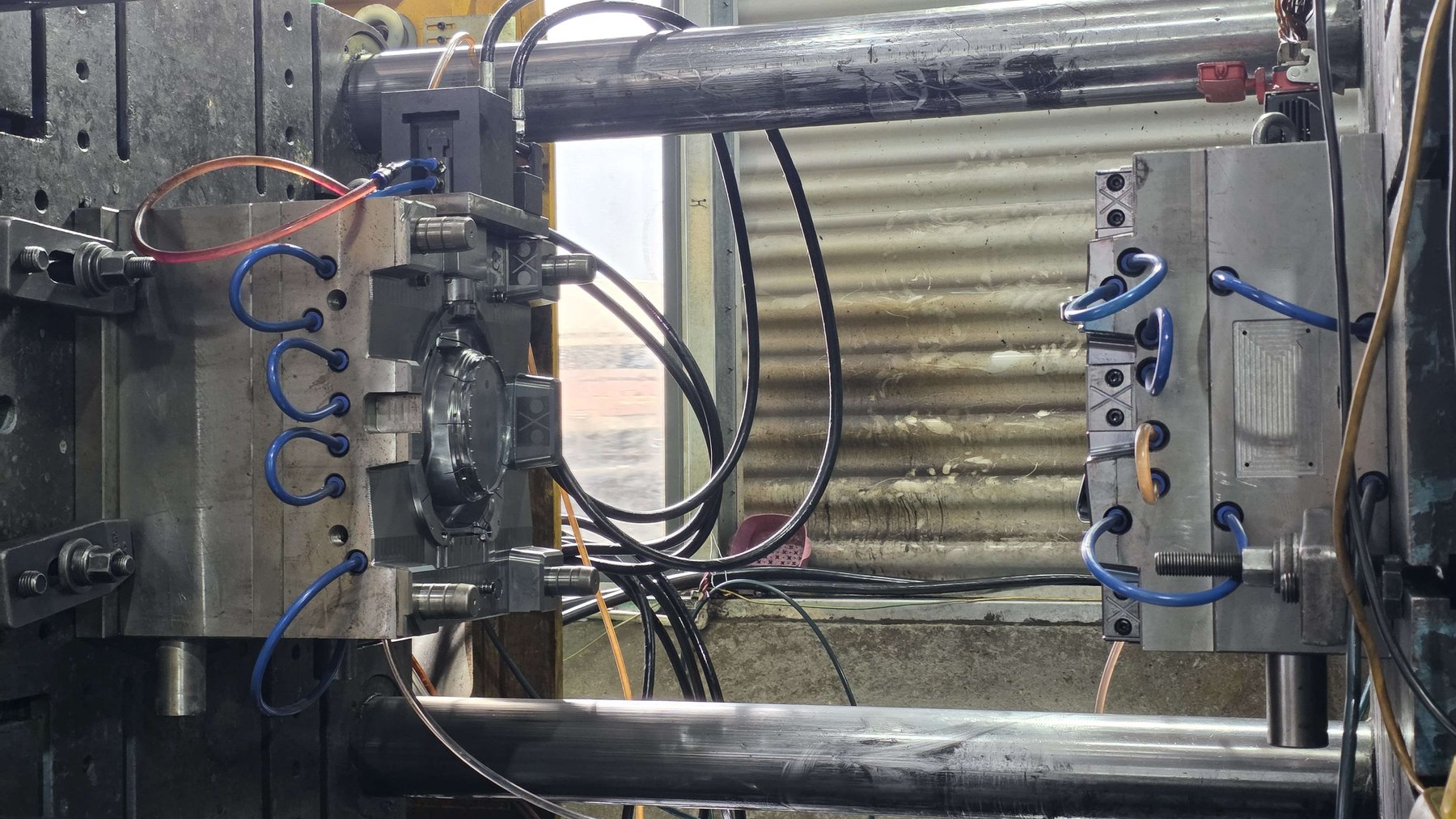
Mold steel selection comes down to expected shot count more than any other factor.
P20, a pre-hardened general-purpose tool steel, is the standard choice for molds expected to run 300,000 to 1 million shots. That covers most mid-volume packaging programs. It machines relatively easily, holds a good finish, and costs less upfront than harder alternatives.
It also wears faster under high-cavitation, abrasive-resin, or extremely high-volume conditions, which is where the cheaper steel stops being cheaper.
H13 is a hardened hot-work tool steel that holds up significantly longer under high shot counts, multi-million-cycle production, and resins with abrasive fillers or glass content.
It costs more to machine and typically extends tooling lead time. For a program running multiple years at high volume, the faster tooling payback usually justifies the higher upfront cost.
Where annual volume climbs past a few million units on a single tool, H13 is worth pricing out even when the initial quote runs higher. The same logic drives cavity count decisions: both are upfront spend that buys down piece price.
420 stainless and similar grades show up in cosmetic and cannabis packaging tooling for corrosion resistance and the mirror-polish finish it holds.
Clear PET and glossy PP parts show every imperfection in the mold surface. Stainless resists the pitting and rust that develop in high-humidity production environments, or with certain resin additive packages over time. It is a finish-quality and longevity decision as much as a mechanical one.
Where the buyer is paying for the tool, the steel determines what is actually owned. A P20 mold at end of life is a refurbishment project. An H13 mold with life left in it is a transferable asset, which matters when reading the ownership clause in a manufacturing agreement.
Jadewell specs steel against projected annual volume, resin abrasiveness, and surface finish requirement together.
A low-volume cosmetic launch does not need H13. A multi-million-unit commodity bottle program usually should not be tooled in P20 if the economics support the harder steel.
If a quote does not specify which steel a mold is cut from, ask. It is one of the biggest levers on both tooling cost and how long that tool lasts before refurbishment.
For how mold design decisions interact with part geometry, see Wall Thickness, Draft Angles, and Gate Placement. For how the tool proves out before production, see T1 and T2 mold trials.
Jadewell cuts molds in P20, H13, and stainless, and the steel grade is stated on every tooling quote issued. Tooling is quoted as a separate one-time cost. Request a quote with the annual volume, resin, and finish requirement.