

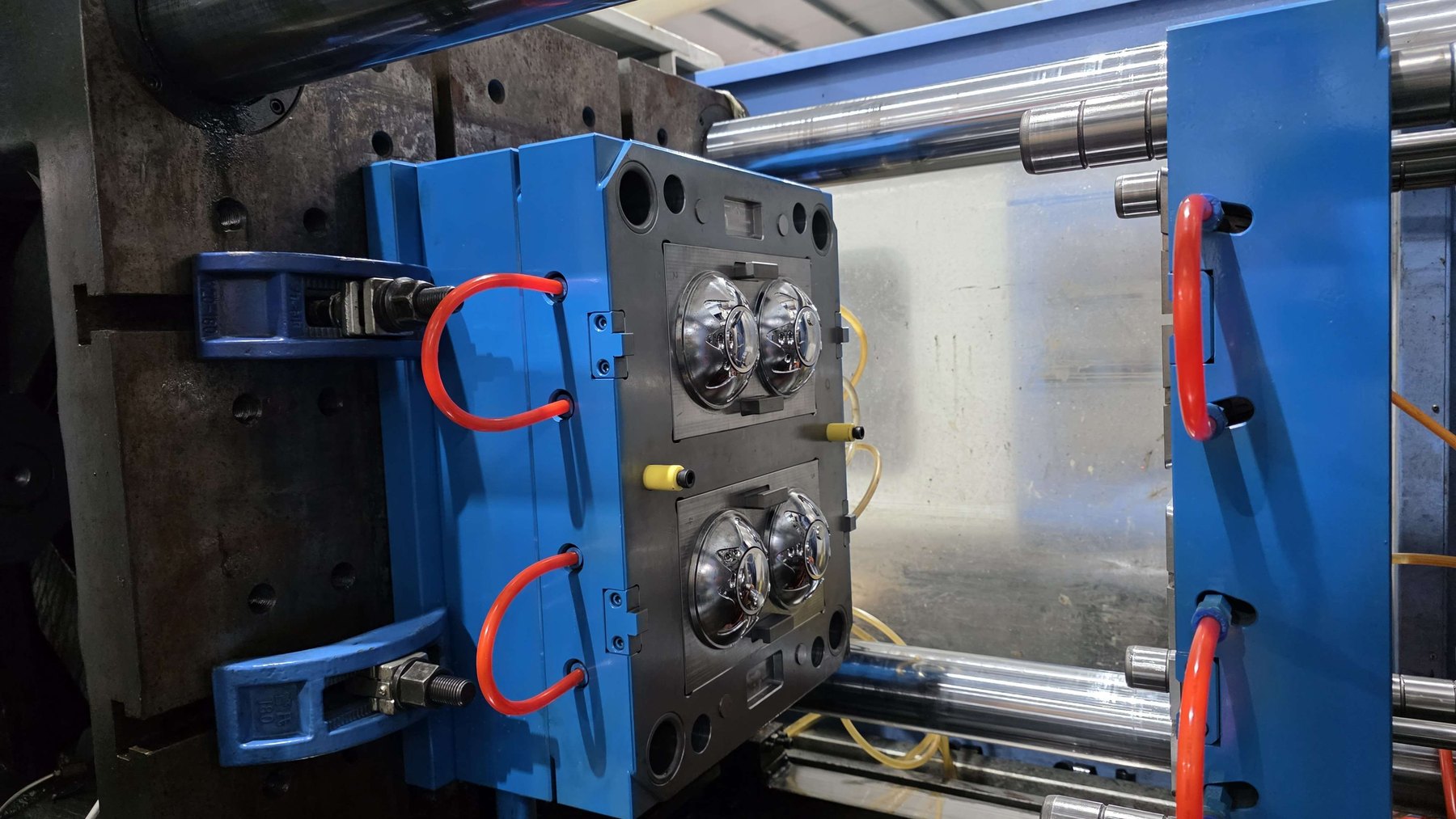
When a tooling quote lists "4-cavity" or "16-cavity," it's describing how many identical parts a single mold produces per cycle, and that number has an outsized effect on both upfront tooling cost and ongoing per-unit price.
A single-cavity mold produces one part per machine cycle. A 4-cavity mold produces four identical parts per cycle from the same machine in roughly the same cycle time. More cavities mean more output per hour, but a larger, more complex, and more expensive mold to build, and a bigger injection molding machine to run it.
Higher cavity counts increase upfront tooling investment significantly: a 16-cavity mold can cost several times more than a single-cavity version of the same part. But at high volumes, that investment is repaid through dramatically lower per-unit cost, since one machine cycle produces many more parts. Low-volume programs rarely justify the tooling premium of a high-cavity mold, which is part of why MOQs and cavity count are connected decisions.
Cycle time (the total time for one complete injection, cooling, and ejection cycle) doesn't scale directly with cavity count, but more cavities can extend cooling time slightly due to the larger overall mold mass. Well-designed multi-cavity tooling accounts for this with balanced runner systems and cooling channels, so all cavities fill and cool evenly.
Match cavity count to realistic annual volume. A mold sized for volume that has not yet materialized ties up capital in tooling that a lower-cavity, lower-cost mold could have delivered with only a modest increase in per-unit price. Where custom tooling is not yet a settled decision, the Jadewell stock versus custom tooling breakdown covers that decision, and open-stock formats skip it entirely. Request a quote at the required cavity count and volume tiers.