

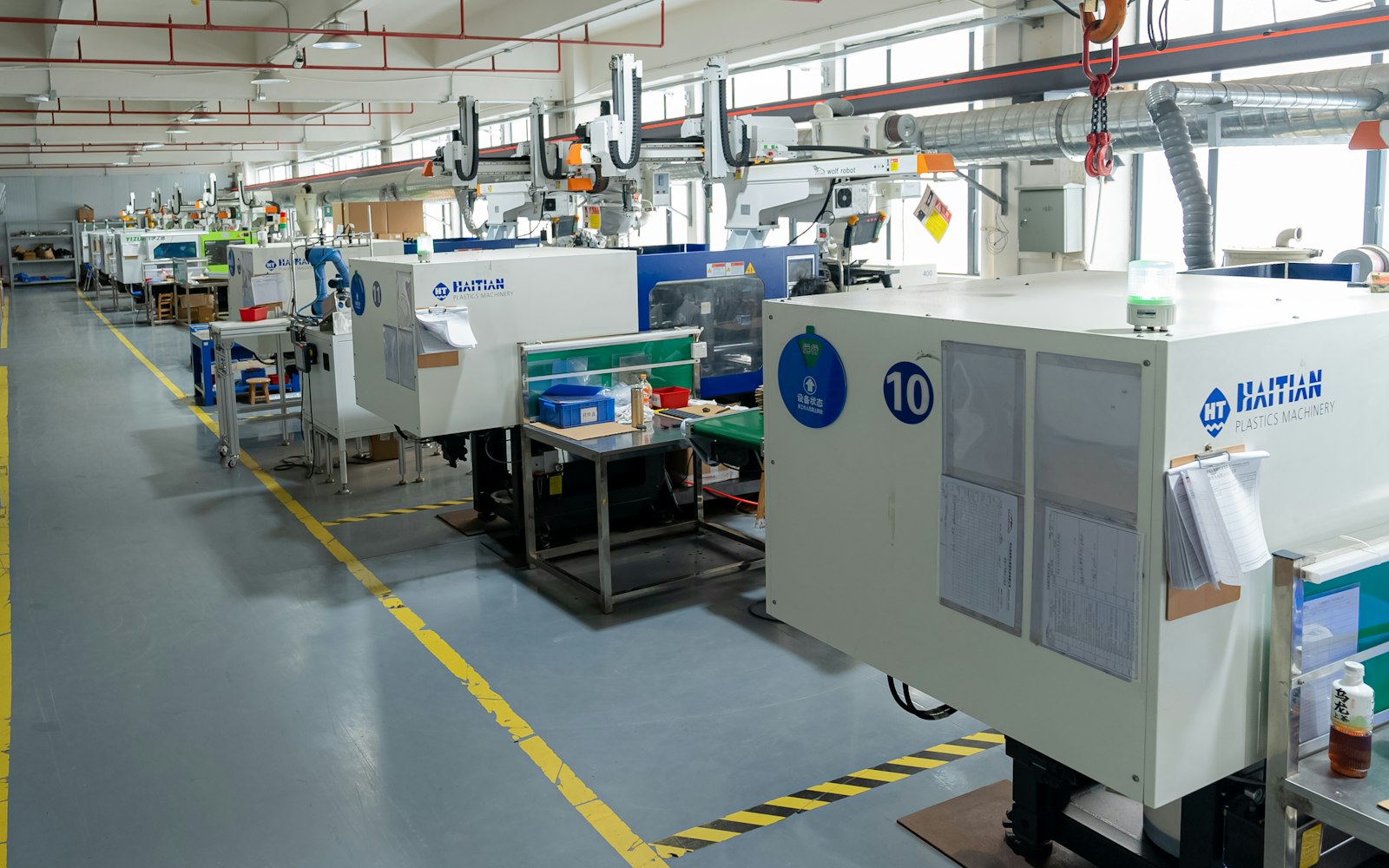
Ordering from an existing stock bottle mold skips tooling cost entirely and can ship in weeks, where custom tooling takes months. It also locks a program into whatever shape, neck finish, and capacity already exists in a supplier's library.
Custom tooling means designing and cutting a mold specific to a given bottle shape. That adds real cost and lead time but gives full control over shelf presence, brand differentiation, and exact fill volume. The stock-versus-custom tradeoff is worth working through before committing either direction.
Shape complexity is the biggest single factor. Sharp geometric transitions, undercuts, textured surfaces, and asymmetric silhouettes all require more machining time and, in some cases, additional mold mechanisms like slides or lifters to release the part cleanly.
Cavitation count matters too. A single-cavity tool costs less upfront but produces less volume per cycle, while a higher-cavitation production tool costs more upfront and pays back faster at high volume. How tooling lands on a quote is covered in mold tooling cost.
Steel grade is the third variable, and stainless is common on cosmetics tooling specifically because clear PET shows every imperfection in the mold surface.
Mold design and DFM review typically take 2 to 4 weeks. Steel procurement and CNC machining of the core and cavity run 6 to 10 weeks depending on complexity and steel grade. First-article sampling and adjustment add another 2 to 4 weeks before a tool is production-ready.
A realistic timeline for a moderately complex cosmetic bottle runs 12 to 16 weeks from design freeze to first production shipment, longer for highly textured or mechanically complex shapes. The full quote-to-production sequence lays out each step.
The most common lead-time killer is an unfinalized design going into tooling.
Texture, logo placement, or neck finish changes requested after steel is cut require rework that adds weeks. Locking design intent, including closure compatibility, before tooling starts is the single highest-leverage thing a brand can do to hit a launch date.
Draft angle, wall thickness, and undercut issues get resolved on the drawing, before steel is cut, which is what the DFM checklist exists to catch.
Jadewell cuts cosmetic bottle tooling in stainless and H13 and runs mold flow simulation before machining. Tooling is quoted as a separate one-time cost. Request a quote with the bottle drawing, finish code, and annual volume.