

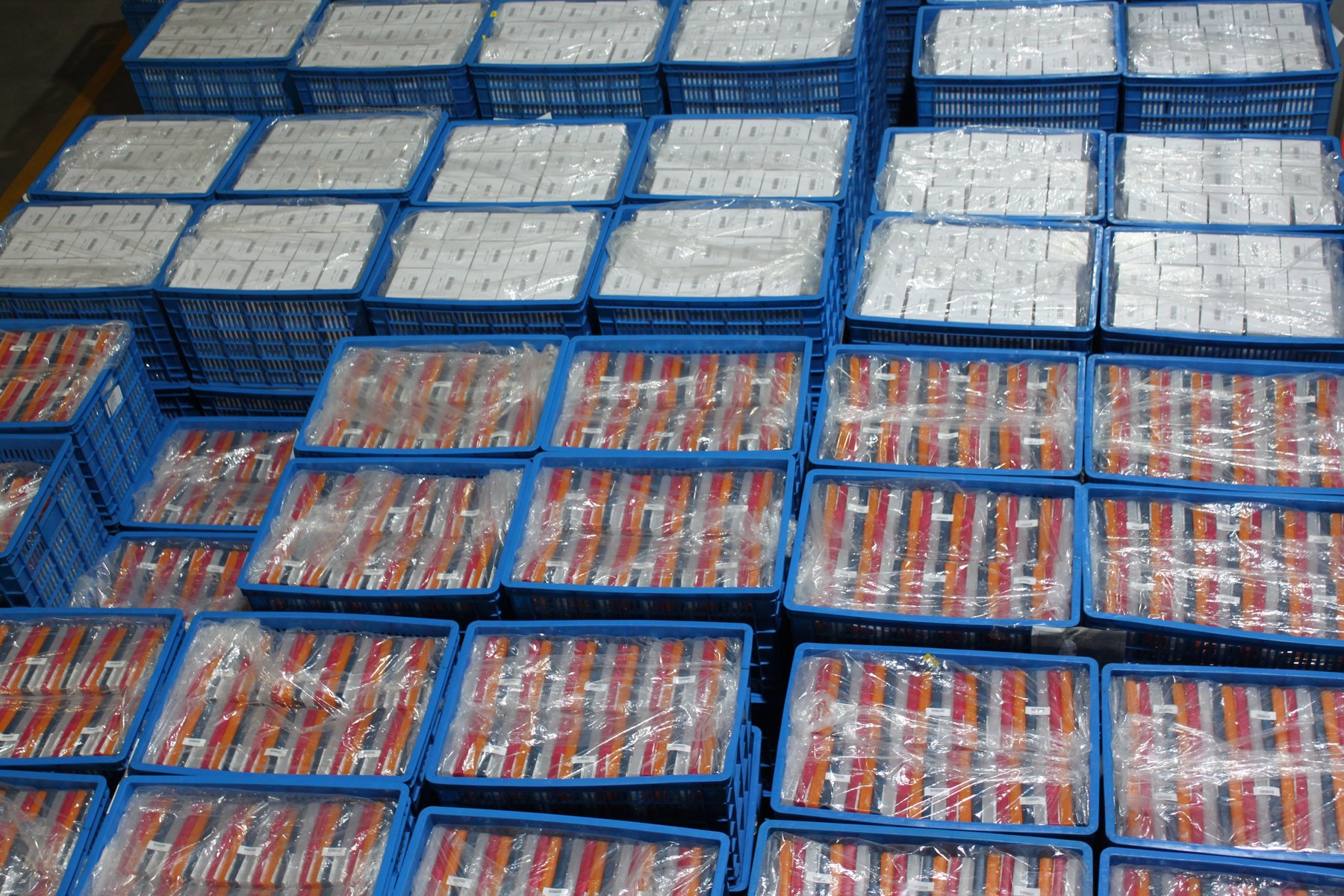
A bottle that looks perfect on a QC bench can still fail in a warehouse or on a delivery truck if the underlying physical tests were skipped. These are the core tests that catch problems before they reach the customer.
Filled containers are dropped from a specified height onto a hard surface at various orientations, simulating warehouse handling or transit conditions.
The test confirms the container and closure survive impact without cracking, leaking, or popping open. Drop height standards vary by container size and intended shipping method. Corner geometry matters here, which is why square bottles get more scrutiny at the corner radius than round ones.
Measures the force required to apply and remove a closure, checked against a target range balancing two failure modes. Too little torque risks the cap loosening or leaking in transit. Too much makes the container difficult for the end consumer to open.
Application torque and removal torque are both tested, since they are not always the same value. Results shift with resin: a PP cap and an HDPE cap on the same neck finish will not hold identical torque over a long shelf life.
Filled and capped containers are pressurized or inverted under controlled conditions to detect seal failure at the closure, seam, or gasket before the product ships.
This is non-negotiable for any liquid product and catches defects a purely visual inspection will miss. Where an induction seal is part of the closure system, seal integrity gets tested at the assembly level.
Simulates palletized warehouse storage by applying sustained load to a container, confirming it holds shape and does not deform, buckle, or fail under the weight of product stacked above it.
Where a container ships in a stacked, palletized configuration, compression performance determines whether the bottom layer survives warehouse storage. Top-load capacity is the number to specify.
Simulates the cumulative stress of truck or rail transit by vibrating filled, capped containers across a defined frequency range and duration.
It checks for loosened closures, abrasion damage, or fatigue failure that would not show up in a single static drop test. Long ocean transit makes this more relevant.
These are batch and validation tests, run on samples against a protocol. They sit alongside in-line vision inspection, which runs continuously and catches dimensional and cosmetic drift. A program needs both, and an ISO 9001 quality system is what documents which tests run at what frequency.
Jadewell runs performance testing on custom programs before shipment. The specific tests performed and the documentation supplied are confirmed per program at quotation. Request a quote with the fill weight, closure type, and shipping method.