

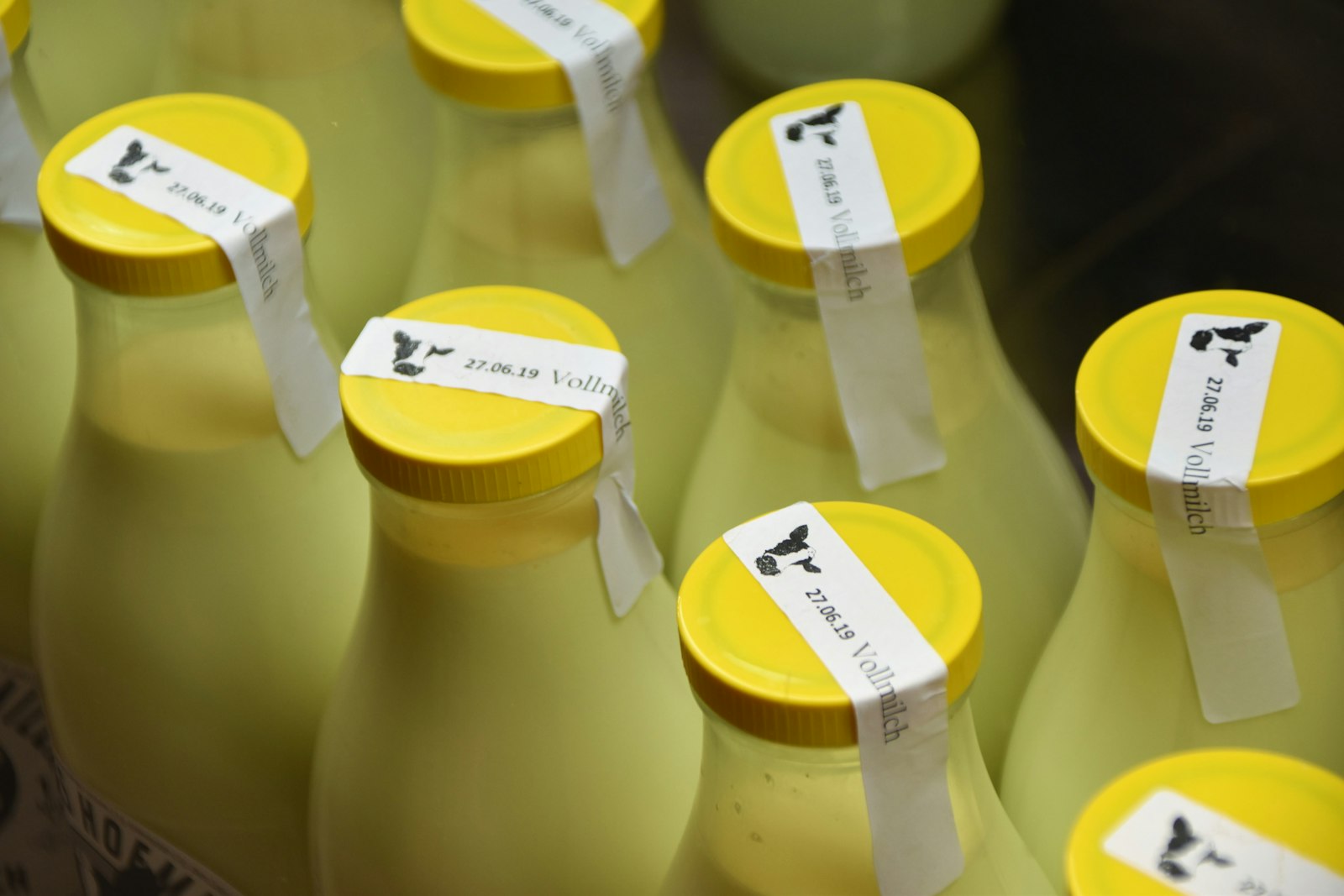
Tamper-evident packaging answers one question for the consumer at the moment of purchase: has this container been opened before? Getting the mechanism right protects the brand and, for regulated categories, determines whether a product reaches shelf at all. What follows covers how the options work, what regulators actually require, and what the filling line has to support.
A foil liner bonded to the bottle's finish using electromagnetic induction heat after the cap is applied, fusing a thin aluminium-and-polymer liner to the container rim. The seal holds the container closed until a consumer physically breaks the foil.
This is distinct from a simple wad or pulp liner inside the cap, which provides cushioning but no seal integrity or tamper evidence on its own.
Induction seals do double duty: beyond tamper evidence they provide a genuine moisture and oxygen barrier between capping and first use. That matters for moisture-sensitive actives — probiotics, certain vitamins, and powdered blends can degrade or clump if exposed to ambient humidity during warehousing and retail shelf time, long before a consumer opens the bottle. They also prevent leakage in transit for liquid and softgel products, where a cap alone is not a reliable seal.
A perforated plastic sleeve placed around the cap and neck, then heat-shrunk to conform tightly to the container's shape. Breaking the perforation to remove the cap makes tampering visually obvious.
Shrink bands are common on beverage and cosmetic packaging, where the band can double as a branding or decoration surface.
Molded directly into the closure as a break-away ring connected by small bridges that snap when the cap is first twisted open.
This eliminates a separate application step on the filling line, since the tamper evidence is built into the cap. The trade-offs: it requires tooling the feature into the closure mold from the start, and it constrains resin choice. PP is the usual pick because the bridges need to snap cleanly.
This is where most buyers over-spec or under-spec, because the rule people assume exists frequently does not apply to their category.
Over-the-counter drugs carry a specific federal tamper-evident packaging mandate under 21 CFR 211.132, a genuine, prescriptive requirement.
Supplements have no equivalent rule. They fall under 21 CFR Part 111, FDA's current good manufacturing practice regulation for supplements, which requires quality control processes and packaging that protects the product's identity, purity, strength, and composition. It does not specify a tamper-evident seal, band, or induction liner the way the OTC drug rule does.
That said, FDA's broader authority still applies. A supplement involved in an actual tampering incident, or sold in packaging that misleads consumers about its condition, can trigger action under the Federal Food, Drug, and Cosmetic Act's general adulteration and misbranding provisions, so the absence of a specific packaging rule does not remove the exposure.
Target, Walmart, and most national chains require tamper-evident packaging as a vendor condition regardless of what federal law mandates for the category. Retailers carry their own liability exposure and consumer-trust considerations independent of FDA's minimum.
Packaging built to the letter of Part 111 without tamper evidence will fail vendor onboarding at most major chains long before it ever becomes an FDA compliance question. Treat tamper evidence as a retail-access requirement.
This is also why induction sealing has shifted from premium feature to default on supplement bottles. Equipment has become inexpensive enough, and retailer expectations common enough, that skipping it now reads as a cut corner. The per-unit cost of an induction liner is small against the retail rejection or return risk of shipping an ingestible product without one.
A child-resistant closure is tested on whether a child can open it. A tamper-evident feature is about whether an adult can tell it was opened already. They solve different problems and are certified differently.
Regulated categories frequently need both. In cannabis and supplement programs the two features are often specified into the same cap, which is a tooling decision that has to be made before the mold is cut.
Regulated categories, particularly anything ingested or applied to skin, often benefit from stacking two mechanisms: an induction seal for the primary barrier plus an integrated tamper band on the cap for a visible secondary cue.
Lower-risk categories can usually get by with one. Over-speccing costs real money per unit across a production run.
This constraint derails programs late: induction sealing requires an induction sealer on the filling line and foil liners sized to the exact finish diameter. Confirm that the co-packer or in-house line has induction capability before specifying it. Retrofitting a line for induction sealing is a capital cost.
Not every bottle and closure pairing is induction-seal-ready out of the box either. Retrofitting it onto an existing program sometimes means adjusting the neck finish, which means new tooling.
Integrated tamper bands avoid the line-equipment question entirely but move the cost into closure tooling instead. Shrink bands require a heat tunnel and add a labour or equipment step, but work on almost any container geometry.
Jadewell tools integrated tamper bands into closure molds, sources induction-compatible liners cut to the specified finish diameter, and builds induction-seal-compatible neck finishes into supplement bottle programs as a standard specification.
See Jadewell's plastic closures and caps, or request a quote on the bottle, closure, finish code, and seal specification.
Sources: 21 CFR § 211.132 (OTC tamper-evident packaging — applies to drugs, not supplements); 21 CFR Part 111 (Dietary Supplement CGMP), eCFR. This article provides general information only.