

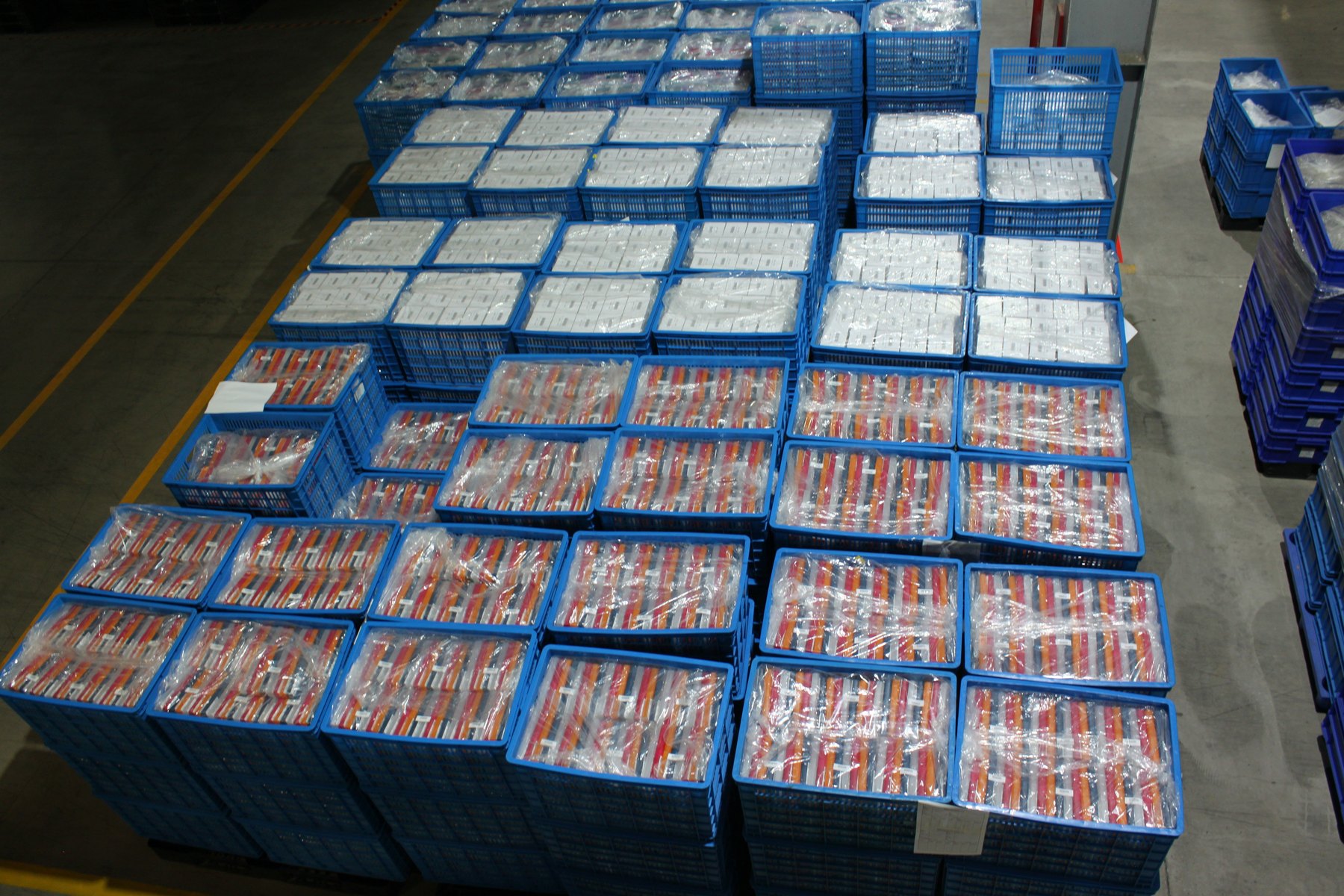
Ocean freight is priced by the container, which means understanding how many units actually fit in a container, by both volume and weight, is essential to getting an accurate landed-cost estimate.
A standard 40-foot container has a maximum gross weight around 26,500 kg (58,000 lbs) net cargo capacity, depending on carrier and container type, and an internal volume around 67 cubic meters. Dense products like glass or metal parts often hit the weight limit before the container is full. Lightweight plastic bottles and closures are the opposite: they typically fill the container's cubic volume long before approaching the weight limit.
Because plastic bottles are volume-limited, the real lever for freight efficiency is bottle design and stackability. A bottle designed to nest or stack more efficiently can meaningfully increase units per container, while further reducing bottle weight past a certain point saves negligible freight cost once the load is already volume-constrained.
Request units-per-container figures alongside per-unit pricing when comparing bottle designs or suppliers. Two bottles priced identically per unit can have meaningfully different total landed cost once the number that actually fits in each ocean shipment is accounted for. The same discipline applies when reading the quote itself.
Ask for that math up front, then request a quote on the bottle and case pack, or start from an open-stock format.