

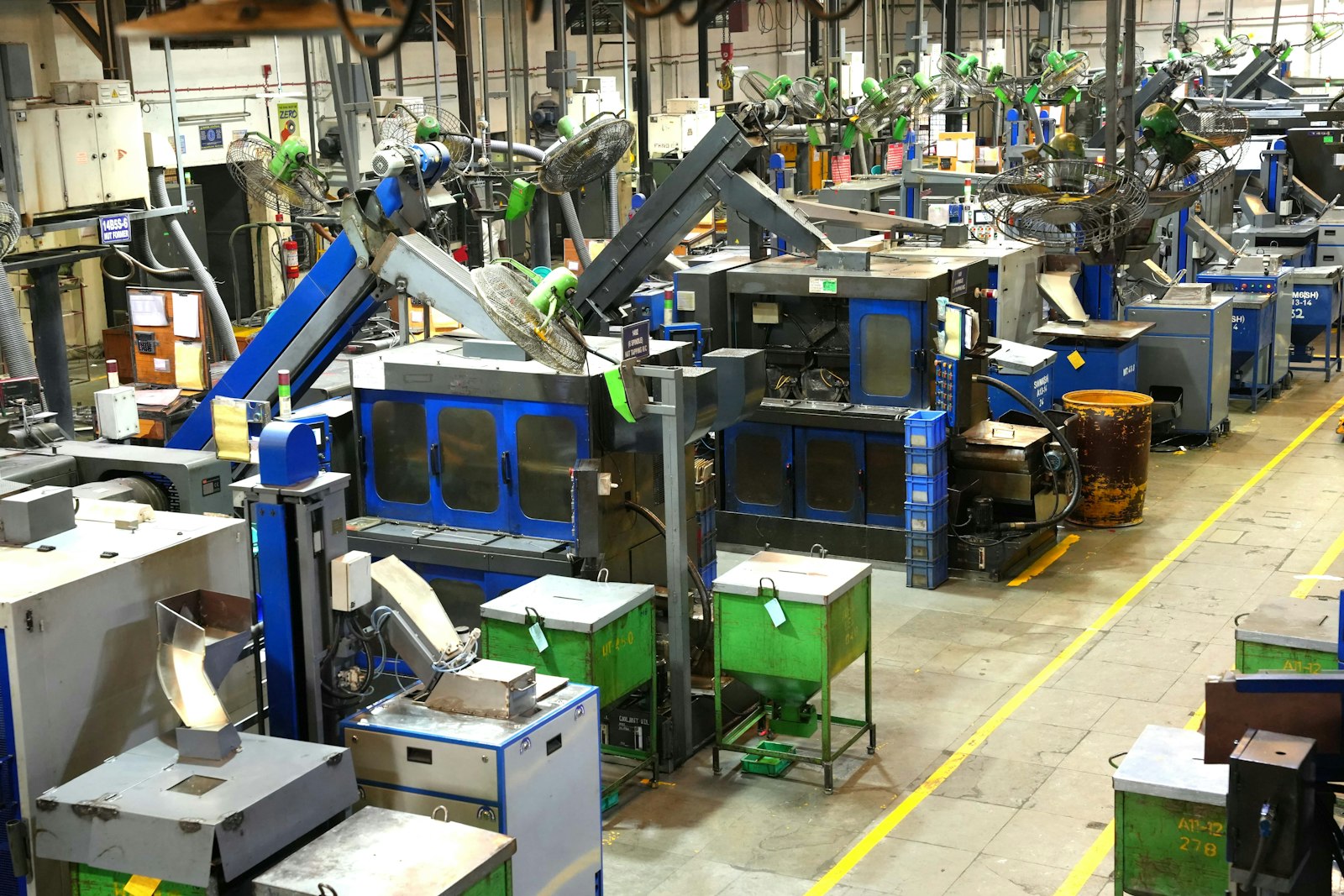
Injection molding and blow molding both turn plastic pellets into finished parts, but they start from opposite places. Injection molding forces molten plastic into a closed mold under pressure, filling every cavity at once. Blow molding starts with a hollow tube or preform, then inflates it against the inside walls of a mold using air pressure. The difference in process shows up directly in what each one is good at making.
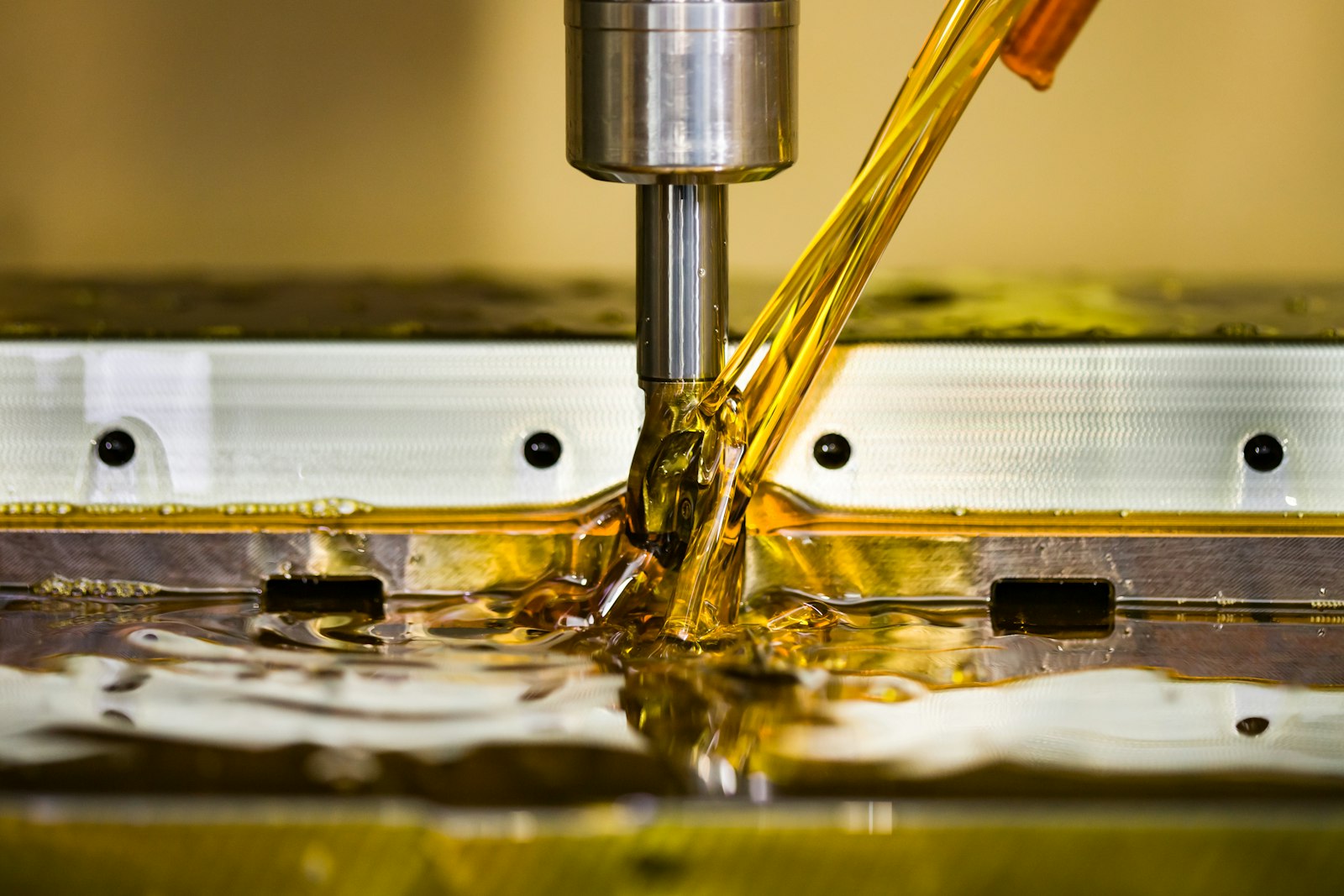
Injection molding is the right process for solid, precise parts: caps and closures, jars, and anything with fine detail like threading, hinges, or tight tolerances. Because the mold fills under pressure, injection molding holds dimensional accuracy well and can produce complex geometry in a single shot, including snap fits and living hinges in PP. It is also the faster of the two processes for small, dense parts, which keeps per-unit cost down at volume.
Blow molding is built for hollow parts, primarily bottles and jars with a consistent wall thickness around a cavity. There are two versions worth knowing. Extrusion blow molding (EBM) pushes out a tube of molten plastic and inflates it inside the mold, and it is the standard process for HDPE and LDPE squeeze bottles and tubes. Injection stretch blow molding (ISBM) starts with an injection-molded preform, reheats it, and stretches it with air into its final shape, which is how clear PET bottles get their glass-like clarity and strength. ISBM produces a more precise, higher-clarity bottle than EBM, which is why nearly all PET cosmetic and beverage bottles use it.
A packaging system almost always needs both processes working together. A PET bottle comes from ISBM, but its cap comes from injection molding. A squeeze tube might run through extrusion blow molding for the body and injection molding for the cap and any pump fitting. Knowing which part needs which process matters when pricing tooling, because injection molds and blow molds are different tools with different cost structures and different lead times. Resin choice interacts with this decision too. See PP vs. HDPE vs. PET: Choosing the Right Resin for Your Packaging for how material and process fit together.
Jadewell presses range from 50 to 800 tons for injection work, and the plants run both ISBM and EBM lines depending on the resin and part. Which process a given part needs follows from its geometry: hollow bodies blow mold, solid and detailed parts inject. Color and finish decisions follow a similar logic once the part is molded. See Color Matching in Plastic Packaging for how a Pantone target actually gets built into a molded part.
Explore the Jadewell plastic bottle and plastic jar capabilities, or request a quote with the part drawing and target volume.