

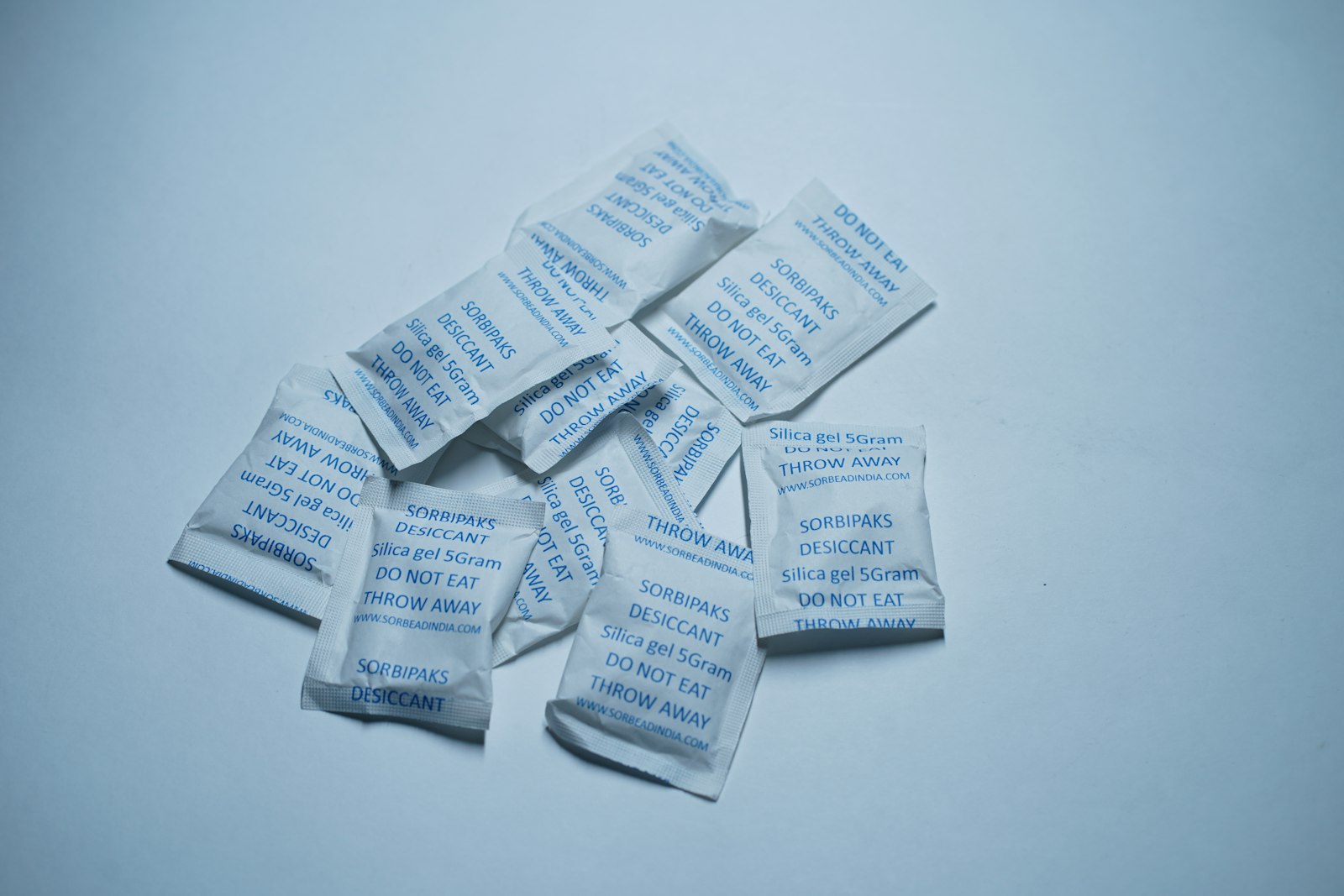
A desiccant, most commonly silica gel, absorbs ambient moisture inside a sealed container. That protects hygroscopic ingredients, the ones that pull water from the air, from clumping, degrading, or losing potency over shelf life.
Not every supplement formulation is meaningfully moisture-sensitive. Adding a desiccant to a formula that does not need one is an unnecessary cost and one more component the consumer has to identify and discard.
Probiotics, certain B vitamins, powdered greens blends, and any formula with hygroscopic mineral salts are the common categories where moisture control genuinely extends functional shelf life. Softgels and liquid-filled capsules have different moisture dynamics and generally do not benefit the way powder and tablet formats do.
A loose packet inside the bottle is simplest and cheapest. It also adds a small object consumers sometimes mistake for a product component, which raises a labeling and communication issue.
A desiccant built into the cap liner or a dedicated canister closure avoids that confusion. It carries a modest cost premium over a loose packet and is increasingly available as a standard closure option.
Accelerated shelf-life testing exposes the actual formula to controlled humidity and temperature over a compressed timeframe. It is the reliable way to determine whether a specific formulation needs desiccant protection.
Two products in the same general category can have meaningfully different moisture sensitivity depending on excipients and processing.
Run the testing before committing to a desiccant specification. For related packaging format decisions, see Blister Packs vs. Bottles for Supplements.
Request a quote on the bottle, closure, and desiccant configuration.