

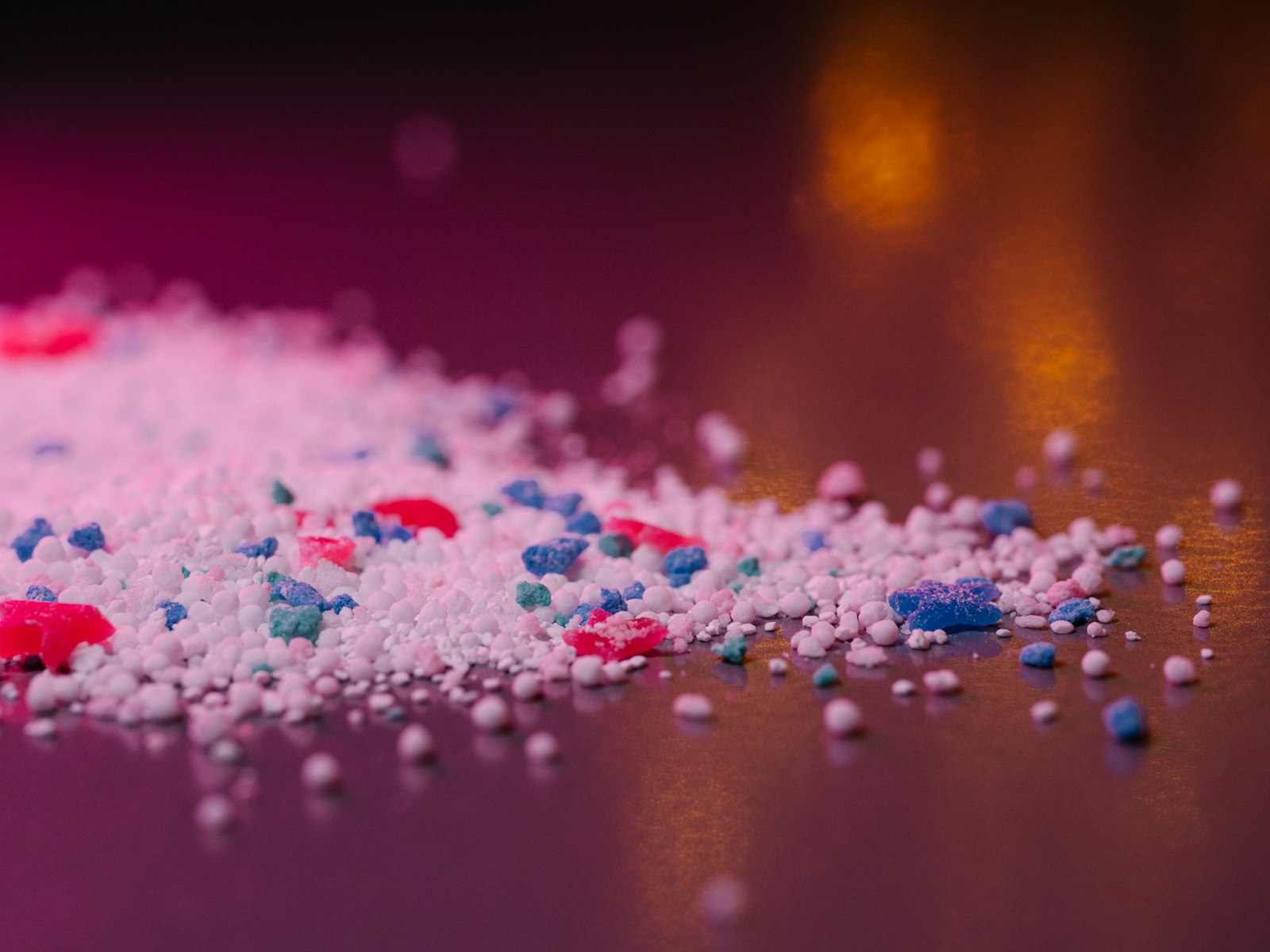
High-density polyethylene is the resin behind more of Jadewell's bottle production than any other material. Buyers sourcing squeeze bottles, wide-mouth jars, or opaque cannabis containers are almost certainly buying HDPE. Here is what the resin actually does and where it stops making sense.
HDPE is a linear polymer with minimal branching, which packs the molecular chains tightly. That density (typically 0.941 to 0.965 g/cm³) is where the name comes from, and it is the reason HDPE resists chemicals and impact better than its lower-density cousin, LDPE.
High crystallinity also means HDPE is naturally translucent to opaque. Where a brand needs glass-like clarity, this is the resin's first hard limit.
HDPE is molded almost exclusively via extrusion blow molding for bottles and injection molding for caps and closures.
Skip HDPE where the program needs optical clarity (use PET), autoclave-level heat resistance (use PP), or a soft-touch tactile finish (use TPE overmolding). HDPE is a workhorse resin, and forcing it into a job it is not built for shows up as returns and complaints later.
Jadewell runs HDPE across both its China and Vietnam facilities, which gives buyers a duty-mitigation option without switching resin or redesigning tooling. Jadewell also runs PCR HDPE blends for brands building a recycled-content claim while retaining impact strength. Recycled-content percentage is confirmed per program at quotation.
Low-MOQ trial runs are available before committing to full tooling. Request a quote with the bottle specs, target resin grade, and volume.