

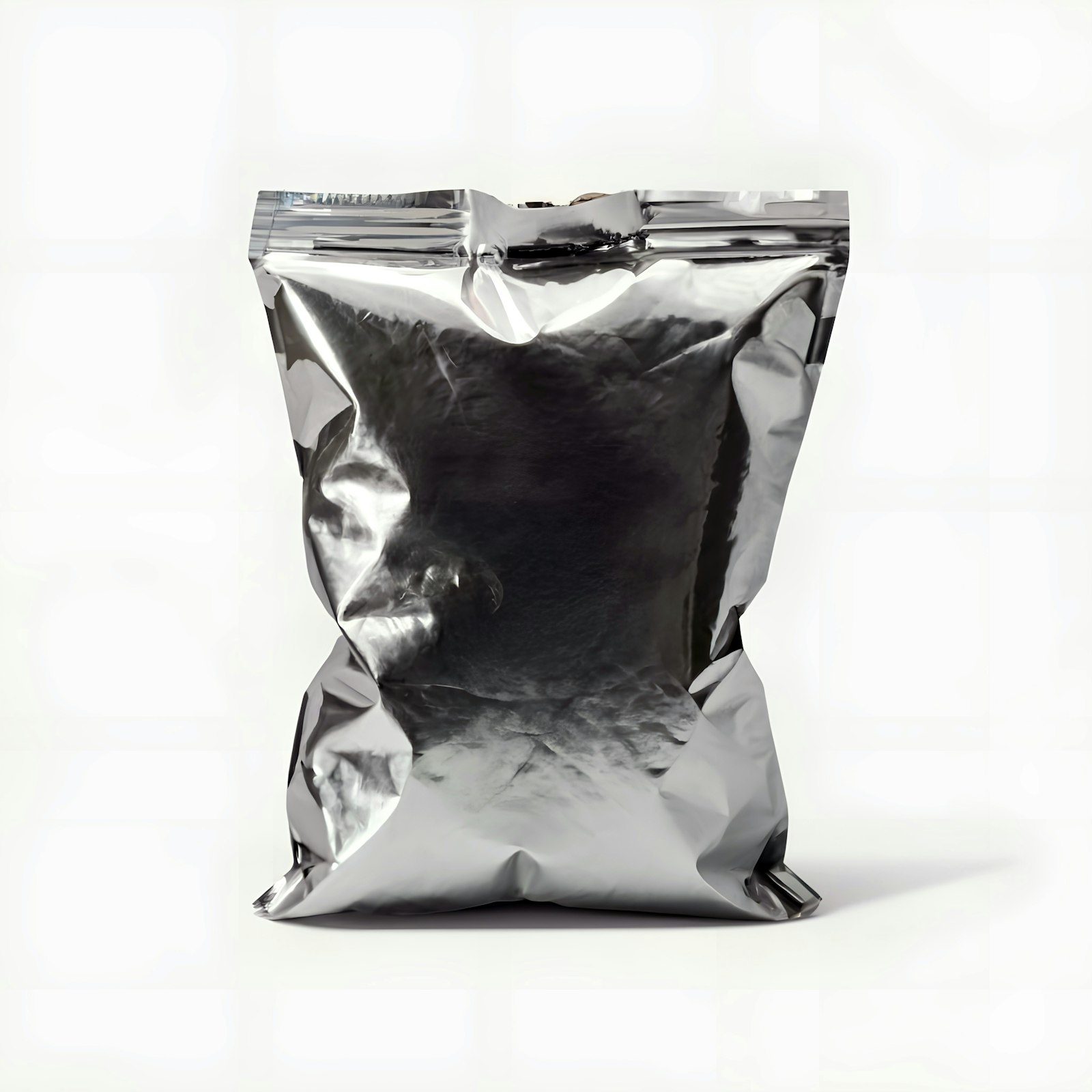
Stand-up pouches use a gusseted bottom that lets the package stand upright on a shelf. They cost more per unit than flat bags because of the added material for the gusset and the more complex sealing geometry.
They also read as more premium and use vertical shelf space more effectively in retail. Flat bags cost less, run faster on many fill lines, and work fine where the package goes into a secondary display, a case, or a dispensary counter tray.
Products competing directly on a retail shelf against other stand-up formats generally need to match the category convention or look visibly cheaper by comparison. Most flower and pre-ground cannabis packaging sits in that category, as do many snack and food-adjacent products.
Where the competitive set stands upright on the shelf, a flat bag reads as a lower-tier product regardless of what is actually inside it.
Both formats can be built with the same barrier film structures, so the format decision and the barrier decision are mostly independent.
A stand-up pouch does not automatically carry better barrier protection, and a flat bag does not automatically carry worse. Barrier performance comes from the film layer structure.
Stand-up pouches accommodate resealable zippers and spouts more readily, because the gusset gives the package a stable base to dispense from. Flat bags are generally a single-use or fold-over-and-clip format unless a zipper is added, which erodes the cost advantage that made the flat bag attractive.
Where a resealable format is not required at all, single-serve sachets remove the question entirely.
Stand-up pouches generally require fill equipment configured for the gusset geometry. Switching from flat bags to stand-up pouches on an existing line sometimes means new tooling or a different fill station in addition to a different roll of film.
Confirm the co-packer or in-house line can run the format before committing to it in packaging design.
Either format beats rigid on shipping weight and cube. A case of pouches packs a fraction of the equivalent case of bottles, which shows up directly against container weight and cube limits. The PE sealant layer is a small share of total package weight either way.
Jadewell produces stand-up and flat formats on the same barrier structures, so format and film can be specified independently. See Jadewell's flexible packaging capabilities, or request a quote with the format, fill weight, and barrier requirement.