

Ask someone to picture "eco-friendly packaging" and most will describe a paperboard carton. It's a tree, so it must be the responsible choice. That assumption doesn't hold up once the full life of the package is examined, from the mill to the landfill. Plastic resin, done right, is frequently the better environmental bet.
Turning wood pulp into the bright white, printable stock used on retail shelves is not a low-impact process. Kraft pulping requires cooking wood chips at high heat and pressure, and getting from raw pulp to the clean printable surface brands expect typically means bleaching, historically chlorine-based, and even modern elemental-chlorine-free processes still generate effluent that has to be treated before it re-enters waterways. That energy and chemical load happens before a single carton is printed or filled.
Paperboard also loses on a pound-for-pound basis. To hit the same strength and moisture resistance as a molded plastic container, a paperboard structure generally needs more material: more mass to ship, more mass to landfill or recycle, more fuel burned getting it from mill to filler to shelf.
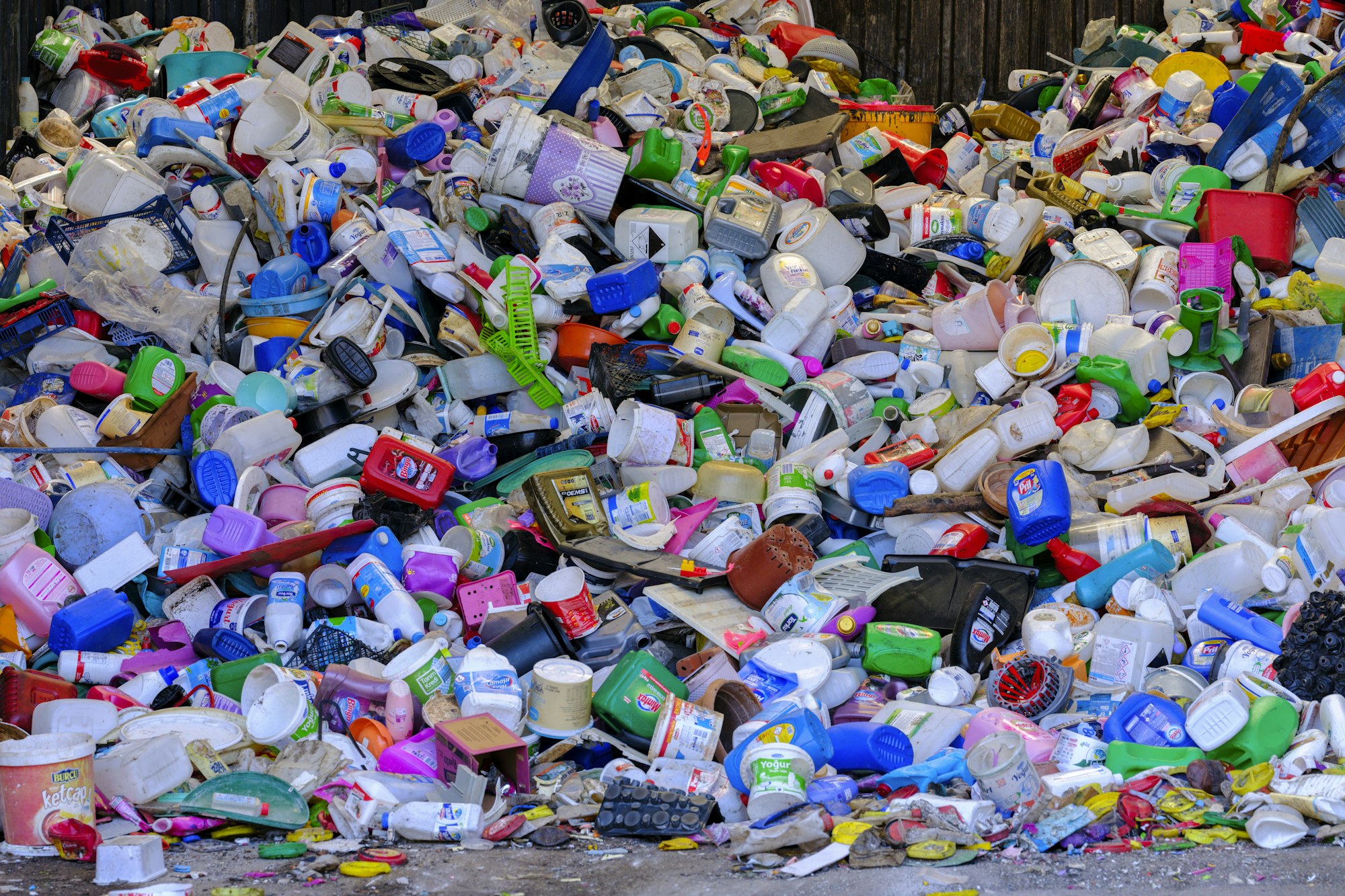
The stereotype falls apart hardest at end of life. PP, HDPE, and PET (the three resins behind most of what Jadewell molds) are exactly the resins municipal recycling infrastructure is built around. Material recovery facilities sort by resin identification code, and PP (#5), HDPE (#2), and PET (#1) are the highest-value, most consistently accepted streams in curbside programs nationwide. Recycled HDPE from milk jugs and detergent bottles gets reprocessed into pallets, pipe, and new bottles. Recycled PET from beverage bottles becomes fiber, strapping, and new PET containers through bottle-to-bottle recycling. Recycled PP becomes battery cases, automotive parts, and new closures, including some of the caps Jadewell molds today.
Coated or laminated paperboard doesn't get the same treatment. Many cartons are lined with a thin plastic or wax layer for moisture resistance, and that lamination is exactly what keeps them out of standard paper recycling streams: most facilities can't separate the layers economically, so a package marketed as "paper" often ends up in the same landfill as the plastic it was positioned against.
None of this makes plastic automatically the right answer for every product. A resin that ends up in a region without reliable curbside collection doesn't get the recycling benefit above, regardless of what the resin code says. And claims like "recyclable" or "sustainable" on a label carry real regulatory weight under the FTC's Green Guides: a claim has to reflect what actually happens to that package in practice, within the recycling systems that exist today.
The honest sustainability comparison asks what happens to a specific package after the customer is done with it, in the markets where it is actually sold. For buyers who want to move further, PCR (post-consumer recycled) resin content is the more direct lever: it uses less virgin material per unit without changing the recyclability profile of the finished container. Jadewell's approach is covered on the sustainability page. Request a quote with the PCR content to be priced for the bottle, closure, or film.