

November 12, 2026
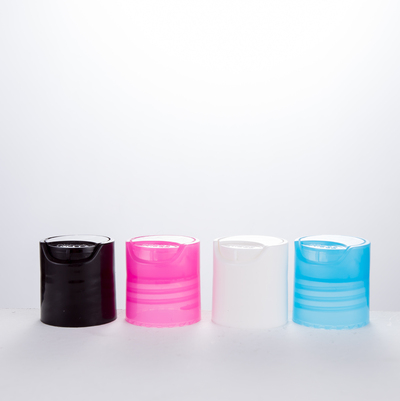
Flip-top closures work well for higher-viscosity products, gels, thick lotions, where a controlled opening and a single dispensing point matter, and they read as convenient on a bathroom counter. Disc-top closures serve a similar function with a smaller, often more precise dispensing opening, common on thinner lotions and haircare products where flow control matters more than a large opening. Screw caps remain the default for jars and wide-mouth containers where the product is scooped rather than dispensed, and they're generally the lowest-cost closure option per unit.
Flip-top and disc-top closures cost more than a basic screw cap primarily because they're typically two-piece assemblies, a base and a lid connected by a molded living hinge, which adds a component, an assembly step, and hinge-durability testing to the production process. A living hinge has to survive thousands of open-close cycles without cracking, which means the resin (usually PP, chosen specifically for its hinge fatigue resistance) and wall thickness at the hinge point are more tightly specified than on a standard screw closure.
Most retail cosmetic packaging in the U.S. carries some form of tamper-evident feature, a shrink band, an induction seal under the closure, or a frangible ring that breaks on first opening, largely as an industry-standard practice rather than a specific federal mandate for cosmetics (unlike over-the-counter drugs, which the FDA does require tamper-evidence for). Retailers increasingly expect it anyway, and it's a cheap addition relative to the trust it buys with the end consumer.
If your formula is thin enough to pour, a disc-top or flip-top isn't automatically the right call just because it looks more premium, viscosity should drive the decision before shelf aesthetics do. If budget is tight and the product is a scoop-and-apply format, a well-designed screw closure with a quality liner often outperforms a cheaper flip-top on both cost and function.
We match closure mechanism to actual product viscosity and dispensing behavior during the sampling stage, not after tooling is committed. For the broader dispensing systems conversation, see Airless Pumps vs. Standard Pumps.
See our plastic closures and caps capabilities and cosmetics packaging options, or request a quote.